


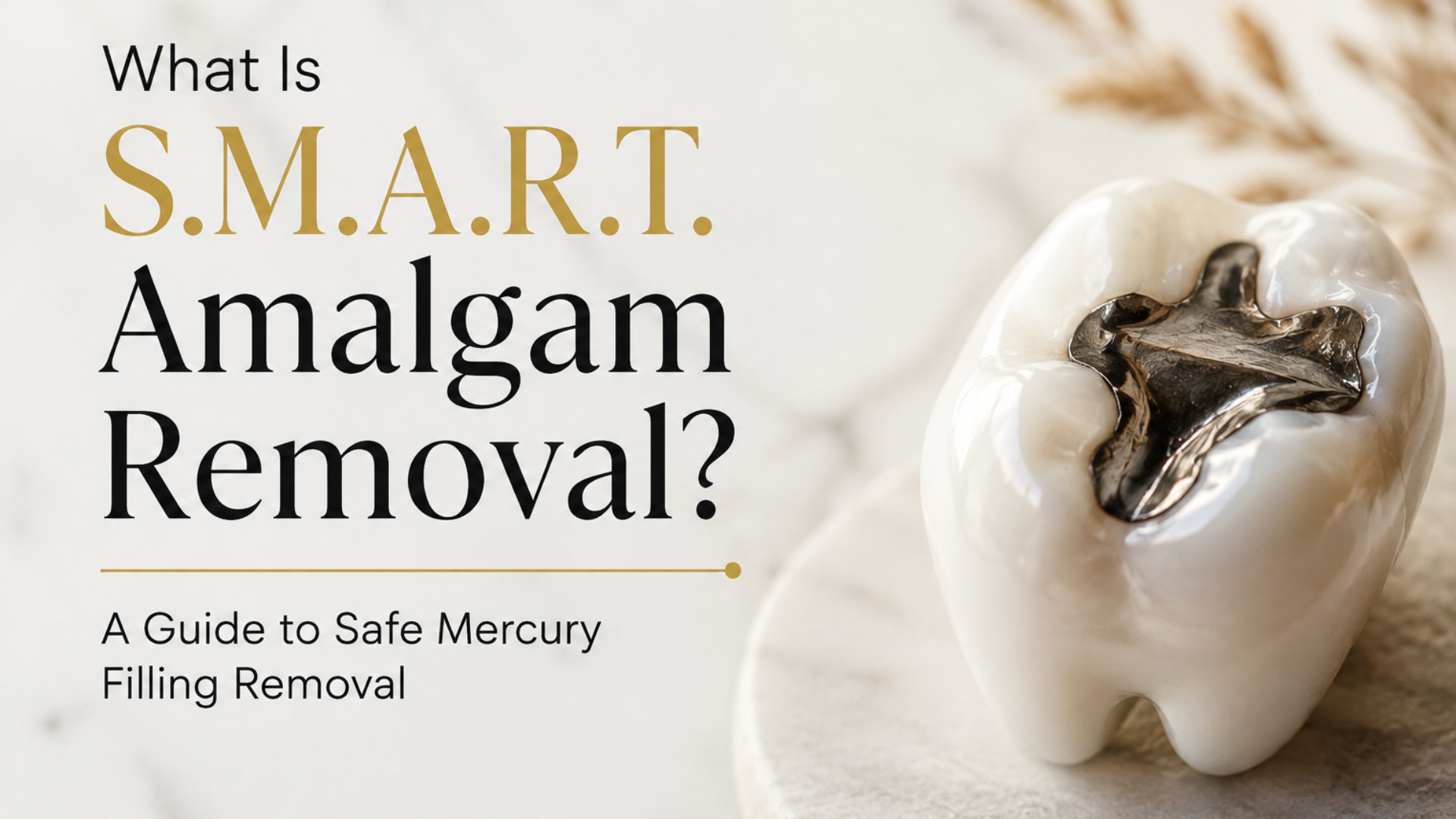
Over the past several years, more patients have begun asking questions about the materials used in their dental restorations. Many have watched documentaries, listened to podcasts, read books about biologic health, or spent time researching the ingredients found in traditional silver fillings. Others simply want to understand what was placed in their teeth years ago and whether there are newer options available today.
As patients learn that traditional silver fillings, also known as dental amalgam, contain mercury along with other metals, it’s natural for new questions to arise. While many amalgam fillings have served patients well for decades, people often wonder what happens if one eventually needs to be replaced.
One of the most common questions dentists hear today is:
“Is there a safer way to remove an old silver filling?”
The answer is yes.
Today, dentists have access to specialized protocols that are designed to reduce mercury exposure during the removal process. One of the most widely recognized is the Safe Mercury Amalgam Removal Technique, commonly known as S.M.A.R.T.
What Is a Silver Filling?
Silver fillings, more accurately called dental amalgam fillings, have been used around the world for well over 150 years. They earned the nickname “silver fillings” because of their metallic appearance.
Dental amalgam is made by combining several metals, including silver, copper, tin, and elemental mercury. Mercury acts as a binding material, allowing the filling to harden into a strong and durable restoration capable of withstanding years of chewing.
Millions of people still have amalgam fillings that continue to function well today. In many cases, these fillings remain stable for decades.
Should Healthy Amalgam Fillings Be Removed?
This is one of the most common questions patients ask, and the answer is different for every individual.
Some patients seek amalgam removal because an existing filling is cracked, leaking, worn, or has decay underneath it. Others have spent time researching dental materials and simply prefer to replace older silver fillings with modern tooth colored restorations. Still others are working with their physician, functional medicine practitioner, or another licensed healthcare provider and have chosen amalgam replacement as part of their overall healthcare plan.
Every patient deserves to understand their options. A comprehensive dental examination allows the condition of existing restorations to be evaluated while also providing an opportunity to discuss personal concerns, treatment goals, and any recommendations from other healthcare providers. From there, an informed decision can be made about whether monitoring existing fillings or replacing them is the best choice for that individual’s situation.
Whenever a patient decides that amalgam removal is the right next step, whether because of the condition of the filling, personal preference, cosmetic goals, or recommendations from their healthcare team, it should be performed using advanced techniques designed to minimize mercury exposure throughout the procedure.
That is exactly why the S.M.A.R.T. protocol was developed.
Common reasons patients choose to replace amalgam fillings include:
- A cracked or broken filling
- Decay developing around or beneath the filling
- A leaking restoration
- A fractured tooth
- A filling that has reached the end of its lifespan
- Cosmetic concerns
- A desire to replace older dental materials with newer alternatives
- A recommendation from a licensed healthcare provider
- Personal preference after learning about the available treatment options
The goal should never be to pressure someone into treatment. Instead, the goal is to provide clear information, answer questions honestly, and ensure that patients understand all of their options so they can make an informed decision.
What Is S.M.A.R.T.?
S.M.A.R.T. stands for Safe Mercury Amalgam Removal Technique.
The protocol was developed by the International Academy of Oral Medicine and Toxicology, also known as the IAOMT, an organization dedicated to educating dental professionals about biocompatible dentistry and evidence based mercury safety.
Rather than being a single product or machine, S.M.A.R.T. is a detailed collection of procedures that work together to reduce mercury exposure while an amalgam filling is being removed.
The protocol was designed to help protect the patient, the dental team, and the surrounding environment.
Why Does Amalgam Removal Require Special Precautions?
When an amalgam filling is drilled, heat and friction can release very small mercury containing particles and mercury vapor.
This does not mean that removing an amalgam filling is unsafe. Dentists have successfully removed these restorations for many years.
However, researchers have found that additional protective measures can further reduce exposure during the removal process. The S.M.A.R.T. protocol was developed to incorporate these additional safeguards whenever an amalgam filling needs to be replaced.
Think of it much like wearing protective equipment during a home remodeling project. The work can certainly be completed without every precaution, but adding extra layers of protection helps reduce unnecessary exposure to dust and debris. The philosophy behind S.M.A.R.T. is very similar.
What Safety Measures Are Used During S.M.A.R.T. Removal?
Every patient is different, and the exact techniques used may vary depending on the clinical situation.
Common components of the S.M.A.R.T. protocol include:
- High volume suction positioned close to the tooth to capture particles
- Isolation of the tooth with a rubber dam
- Supplemental clean air or oxygen when appropriate
- Advanced air filtration systems within the treatment room
- Protective barriers for the patient
- Specialized protective equipment for the dental team
- Removing the filling in larger sections whenever possible instead of grinding away the entire restoration
- Thorough cleanup procedures following treatment
- Environmentally responsible disposal of amalgam waste
Each of these measures works together to reduce exposure throughout the procedure.
What Does It Take to Become S.M.A.R.T. Certified?
S.M.A.R.T. Certification is voluntary.
While dentists are trained to place and remove fillings in dental school, S.M.A.R.T. Certification requires additional education beyond traditional dental training.
To become certified through the IAOMT, dentists complete advanced coursework covering mercury science, biologic dentistry, current research, and safe removal techniques.
Certification includes:
- Extensive educational coursework
- Scientific study of mercury and dental materials
- Written examinations
- Hands on clinical training
- Attendance at IAOMT educational conferences
- Demonstration of proper clinical techniques
- Ongoing commitment to following the established S.M.A.R.T. protocol
This represents many hours of continuing education beyond dental school and reflects a commitment to providing patients with an additional level of care during amalgam removal.
What Are the Benefits of S.M.A.R.T. Removal?
The primary goal of S.M.A.R.T. is simple. To reduce unnecessary mercury exposure during a procedure that requires removing an existing amalgam filling.
Patients often appreciate the protocol because it provides:
- Additional protection during treatment
- Reduced exposure to mercury vapor and particles
- Protective measures for the dental team
- Cleaner treatment room air
- Environmentally responsible handling of mercury waste
- Greater confidence knowing advanced safety procedures are being followed
While no technique can completely eliminate exposure during removal, the S.M.A.R.T. protocol is specifically designed to minimize it as much as reasonably possible.
Is S.M.A.R.T. Right for Everyone?
Every patient has different goals, priorities, and dental needs.
Some people seek out biologic dentistry because they prefer additional safety precautions. Others simply need an older filling replaced because it has worn out over time. Still others are working alongside their physician or healthcare provider and have chosen amalgam replacement as part of a broader healthcare plan.
The best place to begin is with a comprehensive dental examination and an open conversation about your goals. Understanding the condition of your existing fillings, your overall oral health, and your personal preferences allows you to make an informed decision about whether replacement is appropriate.
If replacement is the right choice, discussing the available removal techniques allows you to choose the approach that best aligns with your goals.
S.M.A.R.T. Certified Care at Restore Modern Dentistry
Choosing whether to replace an amalgam filling is a personal decision. Some patients replace failing restorations. Others choose newer tooth colored materials because of personal preference or recommendations from members of their healthcare team. Whatever the reason, patients deserve accurate information and the opportunity to make an informed decision without pressure.
If you decide that replacing an amalgam filling is the right choice, selecting a dentist who has completed advanced training in safe mercury removal techniques can provide additional peace of mind throughout the process.
At Restore Modern Dentistry, Dr. Lorna Offutt and Dr. Lindsay English have both completed the advanced education and clinical training required to become IAOMT S.M.A.R.T. Certified providers. Their certification reflects a commitment to following comprehensive protocols that help minimize mercury exposure whenever amalgam removal is performed.
Whether you have a failing silver filling, are interested in replacing older dental materials, or have been referred by another licensed healthcare provider, our team is happy to answer your questions, evaluate your existing restorations, and help you understand your options.
Education always comes first. If you have questions about S.M.A.R.T. amalgam removal or would simply like to learn more about the procedure, we would be honored to be part of your journey toward making an informed decision about your oral health.